TE Premium Draft Strategy Explained: Top Fantasy Football Targets for 2025

Tight end (TE) premium scoring continues to grow in the fantasy football universe as a method to boost significance for the position most often ignored in roster builds. Premium scoring bonuses range in these leagues from as little as 1.25 per reception to a full 2.0 points for each tight end catch. The higher the scoring bonus, the more important securing a highly productive starting tight end and potential flex becomes for a fantasy championship run.

Below is an in-depth analysis, including players who fit an effective tight end premium draft strategy that you can target this season, whether it be re-draft leagues at Sleeper Fantasy or Underdog Best Ball drafts.

Speaking of fantasy leagues…check out our Sleeper promo code for a $100 deposit bonus this football season!

And don’t forget to sign up for your fantasy football league on Yahoo Sports!

What is the TE Premium Strategy?

In a TE premium format, the key draft strategy revolves around understanding the increased value of elite tight ends compared to standard leagues. Since receptions are often weighted more heavily for the position, top-tier tight ends like Brock Bowers and Trey McBride can provide a massive weekly advantage. In full 2.0 points/reception TE premium leagues, Bowers outscored every receiver and running back not named Ja’Marr Chase last season.

In the early rounds, it’s often worth paying up for an elite option instead of waiting, as the scoring gap between the top-tier tight ends and the swath of mid-tier selections is usually far greater than the gap at other positions. Locking down one of these difference-makers ensures a reliable weekly floor with a ceiling that can anchor your lineup.

However, if you miss out on the top tier, the next best approach is a “two-punch” strategy in the middle-to-late rounds. That means drafting two upside options rather than relying on one mediocre starter. This allows you to capitalize on the premium scoring by targeting athletic breakout candidates or veterans in pass-heavy offenses. It’s also wise to be flexible—don’t force a pick if the value isn’t right. Instead, balance positional needs while remembering that in TE premium formats, tight ends function almost like an extra tier of wide receivers in terms of scoring potential, making them worth prioritizing earlier and more often than in standard leagues.

Pros of the TE Premium Draft Strategy

The biggest advantage of a TE premium draft strategy is that it allows managers to fully capitalize on the positional scarcity of tight ends. In most leagues, only a handful of players at the position consistently deliver strong weekly production, but premium scoring amplifies their value even further. Drafting an elite tight end early not only gives you a reliable weekly difference-maker but also creates a scoring edge over opponents who are left with replacement-level options.

Another pro of TE premium strategy is the added flexibility and upside it creates in roster construction. Because tight ends score more competitively with running backs and wide receivers, managers can invest in multiple tight ends without sacrificing overall team strength. This opens up opportunities to stockpile breakout candidates or trade them later for other needs, since tight ends hold greater trade value in premium formats. In addition, rostering high-upside options provides a weekly advantage in flex spots, where tight ends in TE premium formats often outproduce mid-tier wide receivers or running backs. This not only boosts your starting lineup but also adds depth and long-term roster versatility.

Dominate your Best Ball and season-long fantasy football leagues with our brand-new app that’s available in the Apple App Store and on Android!

Cons of the TE Premium Draft Strategy

One of the main drawbacks of a TE premium draft strategy is the risk of overpaying for the position at the expense of building strength elsewhere. While elite tight ends can provide a weekly advantage, investing an early-round pick in one often means passing on a top-tier running back or wide receiver who could be just as valuable to your roster. If the tight end underperforms, gets injured, or the offensive scheme shifts away from them, the opportunity cost can leave your team thin at positions that typically drive the majority of fantasy scoring. In short, the pressure to “get your guy” early can backfire if the rest of your roster lacks balance.

Another con is that after the top tier, tight end scoring can still be volatile even in premium formats. Many mid-range tight ends rely heavily on touchdowns to buoy their fantasy production, and even with the extra reception value, they can be inconsistent from week to week. This makes it challenging to confidently start them over other flex options, and drafting multiple tight ends to hedge that risk can eat up valuable roster spots. Additionally, because TE premium leagues often drive up demand for the position, you may face inflated prices in drafts or trades, which can limit your flexibility to pivot or extract real value compared to managers who focus on more stable positions.

Top Elite TE Premium Targets in 2025

Brock Bowers, QB, Las Vegas Raiders

After a historic rookie season, the question this year is not whether Brock Bowers is a top-tier tight end option, but just how high fantasy owners will need to take him in tight end premium formats. The former Georgia Bulldogs star led all NFL tight ends with 112 receptions in 2024 despite a slew of subpar quarterback performances.

Bowers saw similar target volume (153) as superstar wide receivers Justin Jefferson (154) and Garrett Wilson (154) throughout 17 games last season. In regular PPR leagues, Bowers finished 0.2 points/game behind leader George Kittle in 2024. With a full 2.0 points per reception TE premium scoring, Bowers surpassed Kittle by more than a full point per game.

Bowers is an easy first-round pick in heavy TE premium leagues and could be in contention for a top-5 selection to lock up one of the true difference-makers for a positional advantage.

Trey McBride, TE, Arizona Cardinals

The Arizona tight end completes a clear-cut elite tier of two tight ends for TE premium leagues. Trey McBride is the only other tight end, besides Bowers, to reach the 100-reception plateau last season and finished 0.1 points/game ahead of the Raiders rookie.

McBride has steadily upped his target totals from 34, to 106, to 147 in his three NFL seasons with the Cardinals. Concerns that Marvin Harrison Jr. may siphon volume away from McBride last season were clearly misguided, as Kyler Murray seemed to rely on his tight end consistently throughout the campaign. If McBride can locate the end zone more this season than his two touchdowns last year, he is a monster TE premium asset capable of providing early round 1 production.

Check out Sean Koerner’s TE Tiers article to see how he stacks up all the tight ends this draft season.

Top Mid-Round TE Premium Targets in 2025

Colston Loveland, TE, Chicago Bears

Rookie tight ends come with a lot of risk in fantasy drafts, especially in TE premium leagues, but we have seen more first-year breakouts at the position over the the last decade. Brock Bowers, Sam LaPorta, Dalton Kincaid, and even Kyle Pitts had impactful rookie seasons at the position.

Colston Loveland showcased his route-running abilities as Michigan’s best receiving option over the last few seasons. He enters a muddied pass-catching situation in Chicago with Rome Odunze, DJ Moore, Luther Burden, and Cole Kmet all competing for targets. The FantasyLabs consensus projections peg Loveland with the ninth-most targets this season among tight ends. If he can become Caleb Williams‘ safety blanket, he should have plenty of open space to work with as defenses attempt to contain the Bears’ downfield threats.

Zach Ertz, TE, Washington Commanders

Most people figured Zach Ertz would be long retired by now, but the savvy veteran continues to play an impactful role. He saw a resurgence last season with rookie quarterback Jayden Daniels in Washington, finishing sixth in tight end receptions (66) and fourth in tight end touchdowns (4).

Ertz is clearly in the large middle ground of “starting” tight ends. The FantasyLabs consensus projections have 11 different tight ends expected to fall between 50-59 receptions in 2025. Fantasy owners should play the value game in the mid rounds of a TE premium draft. With Ertz currently 34 years old, many fantasy players may push him down the draft board. In a full 2.0 TE premium league, Ertz would have finished 10th in fantasy scoring among the wide receivers last season.

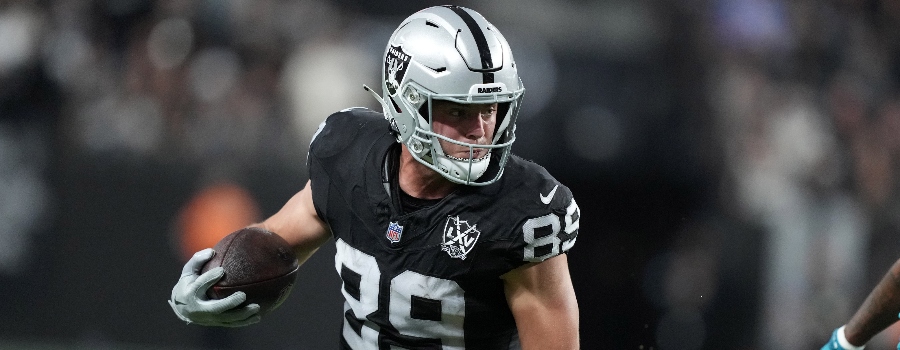
Pictured: Brock Bowers

Photo Credit: Imagn

Tight end (TE) premium scoring continues to grow in the fantasy football universe as a method to boost significance for the position most often ignored in roster builds. Premium scoring bonuses range in these leagues from as little as 1.25 per reception to a full 2.0 points for each tight end catch. The higher the scoring bonus, the more important securing a highly productive starting tight end and potential flex becomes for a fantasy championship run.

Below is an in-depth analysis, including players who fit an effective tight end premium draft strategy that you can target this season, whether it be re-draft leagues at Sleeper Fantasy or Underdog Best Ball drafts.

Speaking of fantasy leagues…check out our Sleeper promo code for a $100 deposit bonus this football season!

And don’t forget to sign up for your fantasy football league on Yahoo Sports!

What is the TE Premium Strategy?

In a TE premium format, the key draft strategy revolves around understanding the increased value of elite tight ends compared to standard leagues. Since receptions are often weighted more heavily for the position, top-tier tight ends like Brock Bowers and Trey McBride can provide a massive weekly advantage. In full 2.0 points/reception TE premium leagues, Bowers outscored every receiver and running back not named Ja’Marr Chase last season.

In the early rounds, it’s often worth paying up for an elite option instead of waiting, as the scoring gap between the top-tier tight ends and the swath of mid-tier selections is usually far greater than the gap at other positions. Locking down one of these difference-makers ensures a reliable weekly floor with a ceiling that can anchor your lineup.

However, if you miss out on the top tier, the next best approach is a “two-punch” strategy in the middle-to-late rounds. That means drafting two upside options rather than relying on one mediocre starter. This allows you to capitalize on the premium scoring by targeting athletic breakout candidates or veterans in pass-heavy offenses. It’s also wise to be flexible—don’t force a pick if the value isn’t right. Instead, balance positional needs while remembering that in TE premium formats, tight ends function almost like an extra tier of wide receivers in terms of scoring potential, making them worth prioritizing earlier and more often than in standard leagues.

Pros of the TE Premium Draft Strategy

The biggest advantage of a TE premium draft strategy is that it allows managers to fully capitalize on the positional scarcity of tight ends. In most leagues, only a handful of players at the position consistently deliver strong weekly production, but premium scoring amplifies their value even further. Drafting an elite tight end early not only gives you a reliable weekly difference-maker but also creates a scoring edge over opponents who are left with replacement-level options.

Another pro of TE premium strategy is the added flexibility and upside it creates in roster construction. Because tight ends score more competitively with running backs and wide receivers, managers can invest in multiple tight ends without sacrificing overall team strength. This opens up opportunities to stockpile breakout candidates or trade them later for other needs, since tight ends hold greater trade value in premium formats. In addition, rostering high-upside options provides a weekly advantage in flex spots, where tight ends in TE premium formats often outproduce mid-tier wide receivers or running backs. This not only boosts your starting lineup but also adds depth and long-term roster versatility.

Dominate your Best Ball and season-long fantasy football leagues with our brand-new app that’s available in the Apple App Store and on Android!

Cons of the TE Premium Draft Strategy

One of the main drawbacks of a TE premium draft strategy is the risk of overpaying for the position at the expense of building strength elsewhere. While elite tight ends can provide a weekly advantage, investing an early-round pick in one often means passing on a top-tier running back or wide receiver who could be just as valuable to your roster. If the tight end underperforms, gets injured, or the offensive scheme shifts away from them, the opportunity cost can leave your team thin at positions that typically drive the majority of fantasy scoring. In short, the pressure to “get your guy” early can backfire if the rest of your roster lacks balance.

Another con is that after the top tier, tight end scoring can still be volatile even in premium formats. Many mid-range tight ends rely heavily on touchdowns to buoy their fantasy production, and even with the extra reception value, they can be inconsistent from week to week. This makes it challenging to confidently start them over other flex options, and drafting multiple tight ends to hedge that risk can eat up valuable roster spots. Additionally, because TE premium leagues often drive up demand for the position, you may face inflated prices in drafts or trades, which can limit your flexibility to pivot or extract real value compared to managers who focus on more stable positions.

Top Elite TE Premium Targets in 2025

Brock Bowers, QB, Las Vegas Raiders

After a historic rookie season, the question this year is not whether Brock Bowers is a top-tier tight end option, but just how high fantasy owners will need to take him in tight end premium formats. The former Georgia Bulldogs star led all NFL tight ends with 112 receptions in 2024 despite a slew of subpar quarterback performances.

Bowers saw similar target volume (153) as superstar wide receivers Justin Jefferson (154) and Garrett Wilson (154) throughout 17 games last season. In regular PPR leagues, Bowers finished 0.2 points/game behind leader George Kittle in 2024. With a full 2.0 points per reception TE premium scoring, Bowers surpassed Kittle by more than a full point per game.

Bowers is an easy first-round pick in heavy TE premium leagues and could be in contention for a top-5 selection to lock up one of the true difference-makers for a positional advantage.

Trey McBride, TE, Arizona Cardinals

The Arizona tight end completes a clear-cut elite tier of two tight ends for TE premium leagues. Trey McBride is the only other tight end, besides Bowers, to reach the 100-reception plateau last season and finished 0.1 points/game ahead of the Raiders rookie.

McBride has steadily upped his target totals from 34, to 106, to 147 in his three NFL seasons with the Cardinals. Concerns that Marvin Harrison Jr. may siphon volume away from McBride last season were clearly misguided, as Kyler Murray seemed to rely on his tight end consistently throughout the campaign. If McBride can locate the end zone more this season than his two touchdowns last year, he is a monster TE premium asset capable of providing early round 1 production.

Check out Sean Koerner’s TE Tiers article to see how he stacks up all the tight ends this draft season.

Top Mid-Round TE Premium Targets in 2025

Colston Loveland, TE, Chicago Bears

Rookie tight ends come with a lot of risk in fantasy drafts, especially in TE premium leagues, but we have seen more first-year breakouts at the position over the the last decade. Brock Bowers, Sam LaPorta, Dalton Kincaid, and even Kyle Pitts had impactful rookie seasons at the position.

Colston Loveland showcased his route-running abilities as Michigan’s best receiving option over the last few seasons. He enters a muddied pass-catching situation in Chicago with Rome Odunze, DJ Moore, Luther Burden, and Cole Kmet all competing for targets. The FantasyLabs consensus projections peg Loveland with the ninth-most targets this season among tight ends. If he can become Caleb Williams‘ safety blanket, he should have plenty of open space to work with as defenses attempt to contain the Bears’ downfield threats.

Zach Ertz, TE, Washington Commanders

Most people figured Zach Ertz would be long retired by now, but the savvy veteran continues to play an impactful role. He saw a resurgence last season with rookie quarterback Jayden Daniels in Washington, finishing sixth in tight end receptions (66) and fourth in tight end touchdowns (4).

Ertz is clearly in the large middle ground of “starting” tight ends. The FantasyLabs consensus projections have 11 different tight ends expected to fall between 50-59 receptions in 2025. Fantasy owners should play the value game in the mid rounds of a TE premium draft. With Ertz currently 34 years old, many fantasy players may push him down the draft board. In a full 2.0 TE premium league, Ertz would have finished 10th in fantasy scoring among the wide receivers last season.

Pictured: Brock Bowers

Photo Credit: Imagn

About the Author

Ben Strunk writes MLB and NFL DFS content for FantasyLabs. He earned bachelor's degrees in journalism and sports management at Ohio University and a masters in sport management from the University of Florida. Strunk has written for a variety of media outlets, including The Gainesville Sun over his career. He has more than a decade of fantasy sports experience and aims to provide data-driven analysis in a clear, efficient voice. Outside of fantasy sports, Strunk is a long time sports card collector, high school sports official, and ultrarunner.