Late QB Draft Strategy Explained: Top Fantasy Football Targets for 2025

Few questions come up more frequently in fantasy football draft discussions than where quarterbacks will be drafted in 1QB leagues. Do you give up talent at the skill positions to pay up for Lamar Jackson or Josh Allen? Or do you wait until the later rounds and settle on the likes of Jared Goff or young, unproven signal callers?

Most “expert” fantasy players tend to lean toward drafting quarterbacks in the late stages of drafts due to the depth at the position in 1QB leagues. Below is an in-depth analysis, including players who fit the draft strategy that you can target this season, whether it be re-draft leagues at Sleeper Fantasy or Underdog Best Ball drafts.

Speaking of fantasy leagues…check out our Sleeper promo code for a $100 deposit bonus this football season!

And don’t forget to sign up for your fantasy football league on Yahoo Sports!

What is the Late QB Strategy?

This popular draft day approach prioritizes other high-value positions, such as running backs, wide receivers, and sometimes tight ends, early in the draft while waiting until the later rounds to select a quarterback. This strategy is built on the understanding that quarterback scoring is often more evenly distributed than other positions, meaning you can still find solid production from QBs taken much later. By delaying the quarterback pick, managers can stack their roster with elite skill players who are harder to replace, maximizing weekly point potential and flexibility.

In the later rounds, the Late QB strategy targets reliable and undervalued quarterbacks with strong upside. Quarterbacks in favorable offensive systems with proven weapons or who have sneaky rushing ability often fit the bill. Some managers even opt to draft two late-round quarterbacks and stream them based on matchups throughout the season. The key is leveraging depth and positional scarcity early, then capitalizing on the depth of the quarterback pool to build a more balanced, high-ceiling roster overall.
Pros of Late QB Strategy

One of the main advantages is the ability to load up on elite talent at positions with greater scarcity early in the draft. Running backs and wide receivers tend to have more variation in weekly scoring and are harder to replace on waivers, so securing top-tier players in those roles can give you a significant edge. By waiting on a quarterback, it ensures that you’re not sacrificing depth at these premium positions for a marginal improvement at a position where production is often more replaceable. This can lead to a more balanced and resilient roster that can better withstand injuries and bye weeks.

Another benefit is that quarterbacks with strong fantasy potential are often available in the later rounds due to the depth of the position and shifting preseason perceptions. This creates opportunities to draft undervalued or breakout candidates—such as mobile quarterbacks who can rack up rushing points, or players in pass-heavy offenses with elite receiving weapons. By spending minimal draft capital, you can still land a quarterback who performs at a near-elite level while keeping the bulk of your early picks invested in positions that are harder to fill during the season. This efficiency in resource allocation can be the difference between a playoff run and a middle-of-the-pack finish.

Dominate your Best Ball and season-long fantasy football leagues with our brand-new app that’s available in the Apple App Store and on Android!

Cons of Late QB Strategy

One drawback is the risk of missing out on truly elite, game-changing quarterbacks who can provide a weekly advantage over most opponents. While quarterback scoring is generally more balanced, players like Josh Allen or Jalen Hurts can post 30+ point performances that are difficult to match with mid- or late-round options on a weekly basis. If you wait too long and your sleeper picks underperform, you could find yourself in a season-long game of “streaming” quarterbacks, constantly searching the waiver wire for favorable matchups and hoping for consistent production.

Another potential downside is that the depth at quarterback can be overstated depending on your league format and settings. Even in standard 1QB leagues, if other managers start grabbing late-round passers earlier than expected, you may be forced into less desirable options with limited upside. This can put pressure on you to hit on every early-round pick at other positions, since your quarterback spot may not provide as much weekly stability or firepower.

Top Late QB Targets in 2025

Jared Goff, QB, Detroit Lions

Jared Goff is one of eight quarterbacks that finished between 280 and 340 fantasy points last year, and he led that group (336 points) as the sixth-best scorer at the position. This draft season, he can easily be found as one of the last quarterbacks taken as a starting option in 12-team leagues.

Concerns with coaching changes in Detroit are hampering expectations for the team as a whole leading into 2025. After a string of successful seasons, former Lions’ Offensive Coordinator Ben Johnson is now the head coach in Chicago and all of a sudden Goff is being left for dead. His bevy of weapons in Amon-Ra St. Brown, Jameson Williams, Sam LaPorta, and Jahmyr Gibbs are all still in place, and an average Detroit defense should still keep Goff throwing late in games. There is no reason to believe he won’t post a fourth top-10 fantasy season in a row in 2025.

Both Sean Koerner and Chris Raybon have Goff ranked as the QB17 in our rankings. And don’t forget to check out Koerner’s QB Tiers and Rankings for a more in-depth look at his QB thought process.

JJ McCarthy, QB, Minnesota Vikings

Essentially a rookie in his sophomore season, JJ McCarthy inherits an incredible opportunity as the solidified starting quarterback in a high-powered offense. Sam Darnold surprised the entire league last season by leading the Vikings to a 14-3 record and a top-10 fantasy season.

McCarthy is a perfect late-round option to pair with a more proven, reliable starter on a fantasy roster. Kevin O’Connell is a quarterback whisperer in Minnesota and has had an entire offseason to build an offensive plan around McCarthy’s strengths. It doesn’t hurt to have superstar wide receiver Justin Jefferson and talented pass catchers Jordan Addison and TJ Hockenson in the huddle as well.

McCarthy has better running ability than Darnold and underappreciated arm strength. Expect the Vikings to lean more on their running game with Aaron Jones and Jordan Mason in 2025, but O’Connell’s play-action pass scheme should open up plenty of deep passing lanes for McCarthy to succeed as a high-floor fantasy option.

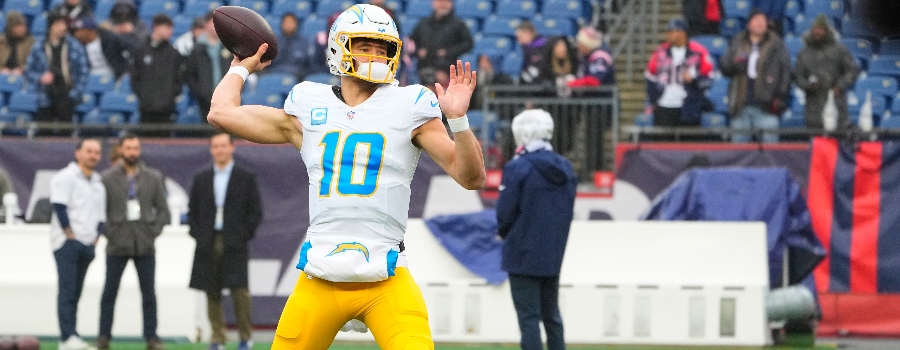
Justin Herbert, QB, Los Angeles Chargers

One of the most talented quarterbacks in the NFL, Justin Herbert is a safe, yet admittedly bland, quarterback proposition at the end of fantasy drafts. His 21-3 TD/INT ratio last season is incredible, but fantasy owners would love to see his pass volume tick up a few notches in a run-happy Jim Harbaugh offense.

Herbert posted the best QBR (101.3) in his career last season but threw the ball nearly 200 times less than in his most pass-happy season in 2022. That said, he still managed a top-12 fantasy finish and clearly has the arm talent to produce higher upside seasons. With Pro Bowl tackle Rashawn Slater already sidelined for the season, the Chargers may need to rely more heavily on Herbert’s arm to outscore opponents in 2025, leading to higher potential fantasy scoring.

Few questions come up more frequently in fantasy football draft discussions than where quarterbacks will be drafted in 1QB leagues. Do you give up talent at the skill positions to pay up for Lamar Jackson or Josh Allen? Or do you wait until the later rounds and settle on the likes of Jared Goff or young, unproven signal callers?

Most “expert” fantasy players tend to lean toward drafting quarterbacks in the late stages of drafts due to the depth at the position in 1QB leagues. Below is an in-depth analysis, including players who fit the draft strategy that you can target this season, whether it be re-draft leagues at Sleeper Fantasy or Underdog Best Ball drafts.

Speaking of fantasy leagues…check out our Sleeper promo code for a $100 deposit bonus this football season!

And don’t forget to sign up for your fantasy football league on Yahoo Sports!

What is the Late QB Strategy?

This popular draft day approach prioritizes other high-value positions, such as running backs, wide receivers, and sometimes tight ends, early in the draft while waiting until the later rounds to select a quarterback. This strategy is built on the understanding that quarterback scoring is often more evenly distributed than other positions, meaning you can still find solid production from QBs taken much later. By delaying the quarterback pick, managers can stack their roster with elite skill players who are harder to replace, maximizing weekly point potential and flexibility.

In the later rounds, the Late QB strategy targets reliable and undervalued quarterbacks with strong upside. Quarterbacks in favorable offensive systems with proven weapons or who have sneaky rushing ability often fit the bill. Some managers even opt to draft two late-round quarterbacks and stream them based on matchups throughout the season. The key is leveraging depth and positional scarcity early, then capitalizing on the depth of the quarterback pool to build a more balanced, high-ceiling roster overall.

Pros of Late QB Strategy

One of the main advantages is the ability to load up on elite talent at positions with greater scarcity early in the draft. Running backs and wide receivers tend to have more variation in weekly scoring and are harder to replace on waivers, so securing top-tier players in those roles can give you a significant edge. By waiting on a quarterback, it ensures that you’re not sacrificing depth at these premium positions for a marginal improvement at a position where production is often more replaceable. This can lead to a more balanced and resilient roster that can better withstand injuries and bye weeks.

Another benefit is that quarterbacks with strong fantasy potential are often available in the later rounds due to the depth of the position and shifting preseason perceptions. This creates opportunities to draft undervalued or breakout candidates—such as mobile quarterbacks who can rack up rushing points, or players in pass-heavy offenses with elite receiving weapons. By spending minimal draft capital, you can still land a quarterback who performs at a near-elite level while keeping the bulk of your early picks invested in positions that are harder to fill during the season. This efficiency in resource allocation can be the difference between a playoff run and a middle-of-the-pack finish.

Dominate your Best Ball and season-long fantasy football leagues with our brand-new app that’s available in the Apple App Store and on Android!

Cons of Late QB Strategy

One drawback is the risk of missing out on truly elite, game-changing quarterbacks who can provide a weekly advantage over most opponents. While quarterback scoring is generally more balanced, players like Josh Allen or Jalen Hurts can post 30+ point performances that are difficult to match with mid- or late-round options on a weekly basis. If you wait too long and your sleeper picks underperform, you could find yourself in a season-long game of “streaming” quarterbacks, constantly searching the waiver wire for favorable matchups and hoping for consistent production.

Another potential downside is that the depth at quarterback can be overstated depending on your league format and settings. Even in standard 1QB leagues, if other managers start grabbing late-round passers earlier than expected, you may be forced into less desirable options with limited upside. This can put pressure on you to hit on every early-round pick at other positions, since your quarterback spot may not provide as much weekly stability or firepower.

Top Late QB Targets in 2025

Jared Goff, QB, Detroit Lions

Jared Goff is one of eight quarterbacks that finished between 280 and 340 fantasy points last year, and he led that group (336 points) as the sixth-best scorer at the position. This draft season, he can easily be found as one of the last quarterbacks taken as a starting option in 12-team leagues.

Concerns with coaching changes in Detroit are hampering expectations for the team as a whole leading into 2025. After a string of successful seasons, former Lions’ Offensive Coordinator Ben Johnson is now the head coach in Chicago and all of a sudden Goff is being left for dead. His bevy of weapons in Amon-Ra St. Brown, Jameson Williams, Sam LaPorta, and Jahmyr Gibbs are all still in place, and an average Detroit defense should still keep Goff throwing late in games. There is no reason to believe he won’t post a fourth top-10 fantasy season in a row in 2025.

Both Sean Koerner and Chris Raybon have Goff ranked as the QB17 in our rankings. And don’t forget to check out Koerner’s QB Tiers and Rankings for a more in-depth look at his QB thought process.

JJ McCarthy, QB, Minnesota Vikings

Essentially a rookie in his sophomore season, JJ McCarthy inherits an incredible opportunity as the solidified starting quarterback in a high-powered offense. Sam Darnold surprised the entire league last season by leading the Vikings to a 14-3 record and a top-10 fantasy season.

McCarthy is a perfect late-round option to pair with a more proven, reliable starter on a fantasy roster. Kevin O’Connell is a quarterback whisperer in Minnesota and has had an entire offseason to build an offensive plan around McCarthy’s strengths. It doesn’t hurt to have superstar wide receiver Justin Jefferson and talented pass catchers Jordan Addison and TJ Hockenson in the huddle as well.

McCarthy has better running ability than Darnold and underappreciated arm strength. Expect the Vikings to lean more on their running game with Aaron Jones and Jordan Mason in 2025, but O’Connell’s play-action pass scheme should open up plenty of deep passing lanes for McCarthy to succeed as a high-floor fantasy option.

Justin Herbert, QB, Los Angeles Chargers

One of the most talented quarterbacks in the NFL, Justin Herbert is a safe, yet admittedly bland, quarterback proposition at the end of fantasy drafts. His 21-3 TD/INT ratio last season is incredible, but fantasy owners would love to see his pass volume tick up a few notches in a run-happy Jim Harbaugh offense.

Herbert posted the best QBR (101.3) in his career last season but threw the ball nearly 200 times less than in his most pass-happy season in 2022. That said, he still managed a top-12 fantasy finish and clearly has the arm talent to produce higher upside seasons. With Pro Bowl tackle Rashawn Slater already sidelined for the season, the Chargers may need to rely more heavily on Herbert’s arm to outscore opponents in 2025, leading to higher potential fantasy scoring.

About the Author

Ben Strunk writes MLB and NFL DFS content for FantasyLabs. He earned bachelor's degrees in journalism and sports management at Ohio University and a masters in sport management from the University of Florida. Strunk has written for a variety of media outlets, including The Gainesville Sun over his career. He has more than a decade of fantasy sports experience and aims to provide data-driven analysis in a clear, efficient voice. Outside of fantasy sports, Strunk is a long time sports card collector, high school sports official, and ultrarunner.