Winter Olympics markets on Kalshi sit in the “prediction markets” lane. People take sides on a question, the price moves as they buy and sell, and the contract settles to a clean result when the event is final.
On-screen it’s simple: every prompt is Yes or No. If you’re right at settlement, the contract pays $1. If you’re wrong, it pays $0.

TL;DR
- One question at a time: Yes or No. No multi-outcome card.
- Prices move because other people are active on the board, so treat it like live odds.
- Medal boards usually lead, then winners, then athlete performance and other events.
- Read the rules once before you put money down. The rules decide what counts.
Winter Olympics Markets 101
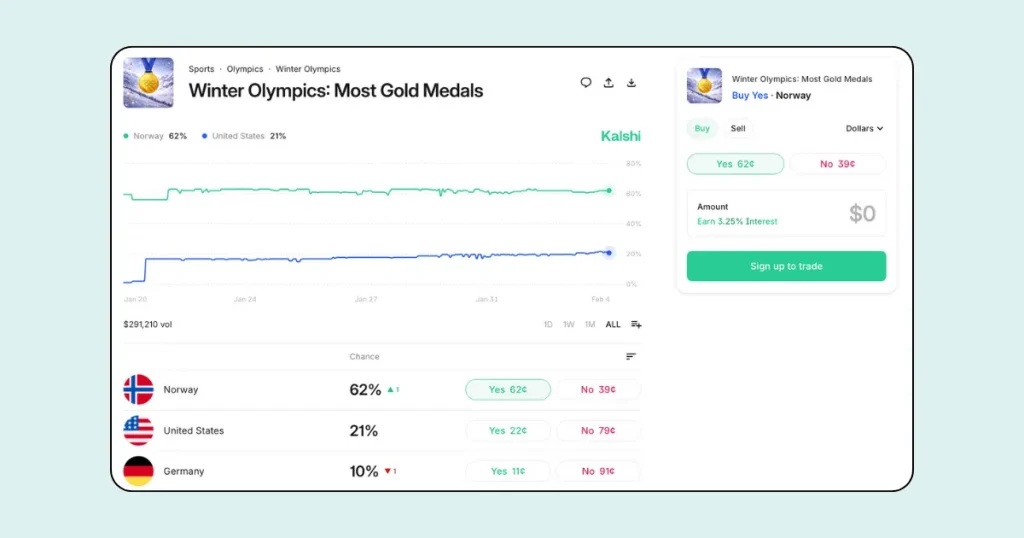
Think of the app as a list of prompts, not a list of teams. You’re taking one side of one outcome, at one price. For example, on Kalshi you can trade on “Will Norway finish with the most gold medals?” You click Yes or No, set your size, and that’s your position.
You’ll see the same setup across the winter games. Some questions are big-picture (gold medals, most medals), and some are narrow (a single race outcome, a specific athlete result). For example, here are the latest Kalshi odds for which country will win the most total medals:
Prediction Markets Vs. Sportsbooks
If you’re used to sportsbooks like FanDuel or DraftKings, you’re trained to look for the book’s number and ask if it’s off. On prediction markets, there isn’t one “house line.” You’re matching with other people, so the price is just where buyers and sellers meet.
That’s why the price can move even when nothing obvious changed on your end. Somebody was willing to pay more, somebody else wanted out, the board moves.
Price Basics: Cents, Payout, And American Odds
Each side is priced in cents. If Yes is 70¢, the market is treating that outcome as roughly a 70% chance right now. If it settles Yes, Yes settles at $1 and No settles at $0. So the upside is $1 minus what you paid (fees can apply). For example: buy at 60¢, and a correct settle is 40¢ per contract.
If you still want to think in american odds, 60¢ is about -150 and 40¢ is about +150. Close enough for feel, not something you’d grade.
How To Trade Step By Step
- Create an account and complete identity checks.
- Fund the account using the payment options shown in-app.
- Open the Sports tab and find the board you want.
- Open a contract and click the rules link (this is where settlement details live).
- Choose Yes or No, set your price and size, and place the order.
Two tips that prevent the “wait, why did I pay that?” moment:
- The price you see is usually the best available for a small amount. If you try to buy more than what’s sitting at that price, the rest fills at the next prices above it.
- For example: you try to buy at 60¢, but only a few contracts are available at 60¢. The rest will fill at 61¢, 62¢, and so on unless you cap your order.
- If the price is moving, don’t keep re-clicking because it changed. Pick your price, place the order once, and let it sit. If it doesn’t fill, you didn’t “miss.” You just didn’t chase.
Key Details for the 2026 Winter Olympics
The opening ceremony is Feb. 6, the closing date is Feb. 22, and live competition starts Feb. 4. That early start matters because results can hit the board before most people feel like the winter games have “started.”
Events are spread across northern Italy and multiple venues, so results don’t land one at a time. Some days barely move the medal tables, other days drop a pile of medals in a short window, and prices adjust fast. If you’re watching from the U.S., a lot of finals land late-night or early-morning, so settlement can show up when it still feels like “the day before” on your end.
In the U.S., coverage runs through NBC with streaming on Peacock, plus windows on CNBC and USA Network. If you’re trading around ice hockey or figure skating finals, check the schedule before you assume a market will “sit” still.
What’s New For The Winter Games
The headline addition for 2026 is ski mountaineering, with men’s sprint, women’s sprint, and a mixed relay. There are also added events across other sports, including:
- Dual moguls in freestyle skiing (men and women)
- Women’s large hill in ski jumping
- A mixed team event in skeleton (a new, single-heat, relay-style competition)
- Women’s doubles in luge
- A team combined event in alpine skiing
New formats mostly change definitions, so expect rule wording to matter more than usual.
What You Can Trade On In These Markets
Medal Count Boards: Most Gold Medals And Medal Totals
These are the cleanest read, and usually the busiest because they update all day.
- Most gold medals
- Total medals (the full medal count)
- Most silver medals
- Most bronze medals
Sport Winners In Popular Sports
This bucket is more “one sport, one question,” so it’s easier to follow if you only care about a few events. Expect contracts around popular sports like:
- Ice hockey
- Speed skating
- Short track speed skating
- Figure skating
- Curling
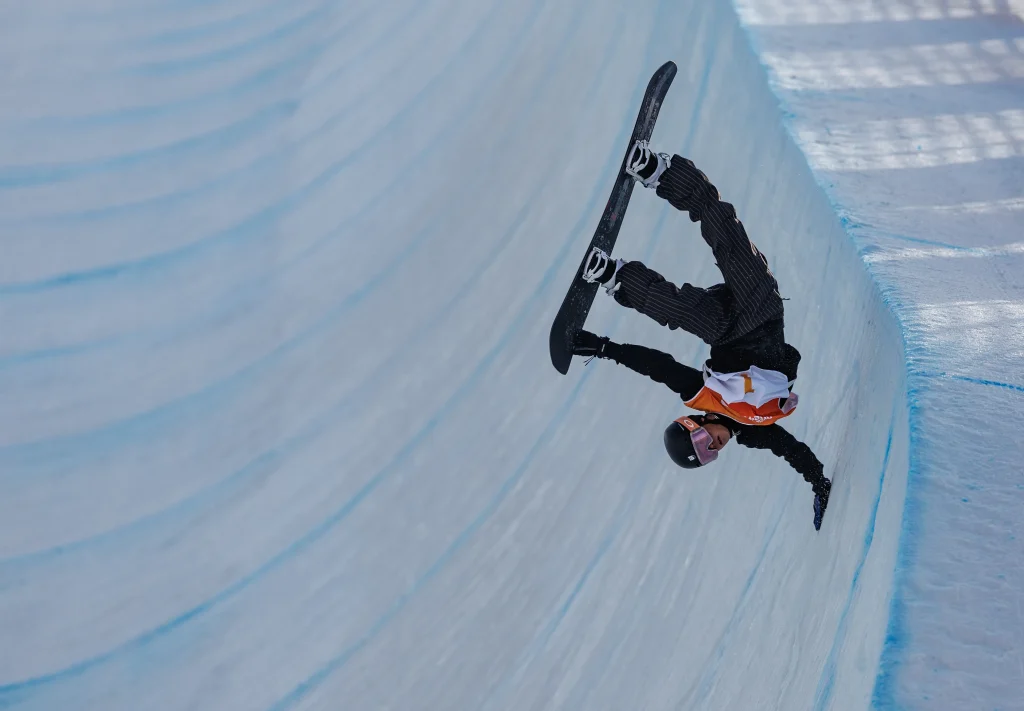
- Snowboarding
- Alpine skiing
Some are straight-up winners, others read like a head-to-head prompt, like whether Canada finishes ahead of Germany in a specific event.
Athlete Performance Markets
These show up closer to the beginning of the winter games and get more niche.
- Medal outcomes for specific athletes
- Placements, times, or “makes the final” questions
These re-price quickly because the inputs are touchy. A late scratch, a heat change, something that changes a race setup, and the contract you’re looking at isn’t being viewed the same way it was an hour ago.
Ice Hockey Contracts: How To Read Ice Hockey Games
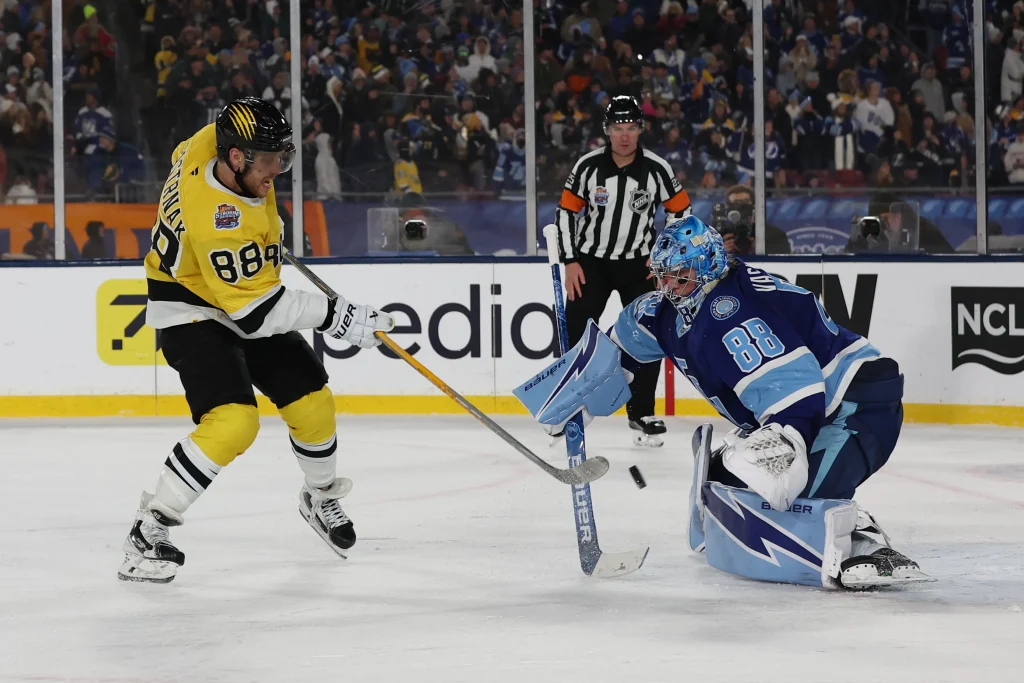
Ice hockey stays busy for one reason: it’s a bracket. People understand brackets, TV leans into them, and the hockey conversation doesn’t really shut up once it starts. The biggest changes usually show up around elimination games and bracket turns.
Before you trade, read the question carefully. Hockey contracts can settle three totally different ways:
- “Will X win this game?”
- “Will X advance?”
- “Will X win the tournament?”
Same sport, same teams, different outcomes.
Availability, Regulation, And Responsible Trading
Kalshi operates as a federally regulated exchange overseen by the Commodity Futures Trading Commission. Sports-related contracts have faced state-level challenges in some places, which can affect what’s available depending on your location, so check the app from where you are and see what’s listed.
Kalshi also lists responsible trading tools like trading breaks and voluntary opt-outs, plus links to outside support resources. Set a budget, take breaks, and don’t turn one bad night into a research project on a country you didn’t care about yesterday.
Winter Olympics Markets FAQs
What are Winter Olympics prediction markets?
They’re prediction markets where you trade Yes/No event contracts on winter olympics outcomes. Things like most gold medals, most medals, or a winner in a specific sport. The contract settles when the result is official under the rules.
Do these work like standard sportsbook odds?
No. Sportsbooks post odds and you’re taking their number. Here, you’re trading with other users, and the “odds” you see are just the current market price.
How do I read a “Most gold medals” board?
Like a live gold medal count table with prices attached. If you’re choosing whether to buy or sell, look at what’s left on the schedule and how many gold medals are realistically still in play for each country.
What should I check before my first trade?
The rules link. It tells you what counts, what source decides settlement, and how edge cases get handled.
What happens after an event ends?
When the rules-defined outcome is final, the winning side settles at $1 and the losing side settles at $0. If you don’t want to hold to settlement, you can exit earlier by closing your position.