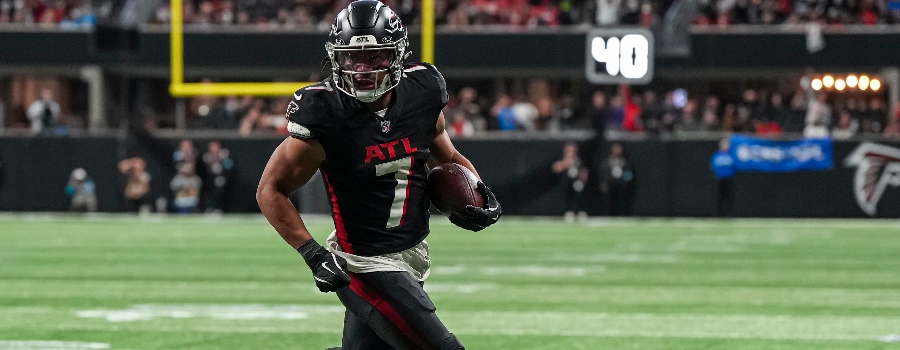
Running back is arguably the most important position in fantasy football for a number of reasons. In today’s NFL, true workhorse RBs are rare. Most teams use a committee approach, which spreads out volume and makes dependable RBs harder to find. Since teams usually only have one RB on the field at a time (while wide receivers often benefit from 2–4 being out there), it’s critical to find a back who sees consistent playing time and touches. As the saying goes, “volume is king” at this position — and it couldn’t be more true.
Not all touches are created equal, though. The most valuable touches are goal-line carries inside the 5-yard line, because they have the highest chance of turning into a touchdown. Next would be targets in the passing game, which allow RBs to rack up receptions and receiving yards. The scoring format matters too. Whether you’re in 0.5 or full PPR, receptions can boost a player’s value significantly. But regardless of format, landing a dominant RB gives your team a huge edge.
RBs are also one of the most fragile positions. They get tackled 15–20+ times per game, are usually smaller in frame, and are more vulnerable to contact and non-contact injuries. That fragility leads to opportunity, though. When a starter misses time, most teams take a “next man up” approach, and their backup can produce high-end value. That’s why I always say that how many points an RB scores at the end of the season has a lot to do with luck — both their own health and their teammates’.
Instead of simply ranking RBs in a vacuum, I prefer to look at each team’s backfield and ask two key questions:
- What is the RB’s role and value when everyone is healthy?
- What would their role and value be if a teammate misses time?
This approach gives us a better sense of each player’s floor and ceiling. Keep in mind, though — these are rough estimates, not weekly projections. If a player is listed as RB34 in the “Starter Out” column, that doesn’t mean I’ll rank them exactly RB34 in Week 10 if their teammate gets injured. A lot can change between now and then. But since I’m releasing this before Week 1 of the preseason, I’ll be updating it regularly as situations evolve.
Dominate your Best Ball and season-long fantasy football leagues with our brand-new app that’s available in the Apple App Store and on Android!

A Quick Note on Draft Strategy
There are a lot of different draft strategies people like to use — Zero RB, Hero RB, Robust RB, and so on. Personally, I don’t like being locked into any one approach. You can win with any of them.
My general preference is to land a stud RB within the first three rounds. I typically aim for two WRs in the first three rounds as well, especially in leagues where you start three or more WRs. Then I’m usually fine waiting a bit at the position, especially through what I call the Frozen Pond Tier, which covers the RB13–24 range. That’s because RB is one of the only positions where you can draft a backup late who ends up offering RB2+ value.
That upside is baked into the chart below — if you load up on some of these lottery-ticket RBs, you can build a strong core without overpaying for volatility in the middle rounds. Use our fantasy lineup builder to see how these backs fit with your overall roster construction before you draft.
How to Use the Chart
For each team, I’ve listed:
- The presumed Week 1 starter
- The primary backup (or 1B option)
Each RB is given a letter grade, which reflects how I value them at their current ADP using a blend of the metrics below.
Role
Is the player in a workhorse role or stuck in a RBBC (Running Back by Committee)?
Workhorses tend to dominate snaps and touches, which gives them a stronger weekly floor and ceiling. In RBBCs, I tend to prefer the backup since they often come at a better price and have clearer upside if roles shift.
Start%
This is my estimate of how likely each player is to start games this season, even if their teammate stays healthy.
- For starters, it’s the percentage chance they keep the job all season
- For backups, it’s their odds of leapfrogging into the starting role
This is a good indicator of job security and how fragile a situation might be.

Health
I flag whether a player is currently healthy and list their Health% — my estimate for their availability in Week 1. This includes injuries, contract disputes, and suspensions. When a starter is questionable or not fully healthy, it gives the backup a notable boost.
ADP
This is the player’s Average Draft Position and serves as the baseline I’m weighing everything against. The goal is always to identify who’s undervalued or overvalued at their current price.
Backup/Starter In and Out
These columns reflect my projected weekly rank for each player:
- “In” is their expected value with their teammate healthy
- “Out” is their expected value if their teammate misses time
Think of these as their floor and ceiling, though of course there are a lot of variables that can impact those ranges.
Final Note
Keep in mind, I’m not weighing just one or two of these factors in a vacuum — the letter grades reflect all of them together. And unlike a basic RB rankings list, this helps you see who I’m actually targeting. A guy might be ranked close to ADP, but because of his role, leapfrogging potential, or injury upside, I might still view him as a must-draft.
With that said… here’s this year’s initial RB Upside Chart.
YOU MAY ALSO LIKE
 NFL DFS Picks: Landon’s Locks for Week 1
 NFL DFS Showdown Picks Breakdown (Monday, Nov. 6) for Chargers-Jets Monday Night Football
 Week 8 NFL DFS Cheat Sheet: Top Picks, Stacks, Values, Leverage Plays, Simulations, More
 NFL DFS Week 9 DraftKings Main Slate Look Ahead: Early Values in Our Projections